

Fire safety is a paramount concern in any building, whether it’s a residential property or commercial space. That’s why it’s important that fire door inspections are conducted on business premises and within shared residential spaces, to protect occupants and allow for safe evacuation should an incident occur.
To ensure that property managers are informed about fire door inspection protocol, we are answering the following; what a fire door inspection entails, the legal requirements of a fire door inspection, and its significance in maintaining a safe environment.
What is a fire door inspection?
A fire door inspection is a complete assessment of the fire doors within a building, both internally and externally, to ensure they are fully operational, meet safety standards, and comply with UK Fire Safety regulations.
These inspections should always be carried out by qualified professionals who are well-versed in fire safety standards and will ensure they meet the requirements under BS 476 Part 22 / BS EN 1634 Part 1.
In the UK, government guidelines since 2005 have stipulated that all business owners or ‘accountable person(s)’ must maintain fire doors and conduct regular fire door inspections.
It should also be noted that new regulations (Fire Safety (England) Regulations 2022) from January 2023 state that in shared residential properties of over 11m (more than 4 storeys), apartment doors should be inspected on an annual basis and communal doors on a quarterly basis.
What is involved in a fire door inspection?
During a fire door inspection, you can expect your assessor to carry out the following:
- Visual assessment:
The fire door inspection begins by visually examining the doors and the related components. These components include hardware, such as locks, handles and panic hardware (the long handles on fire doors). Inspectors check for signs of malfunction, damage, wear, rust, or improper modifications.
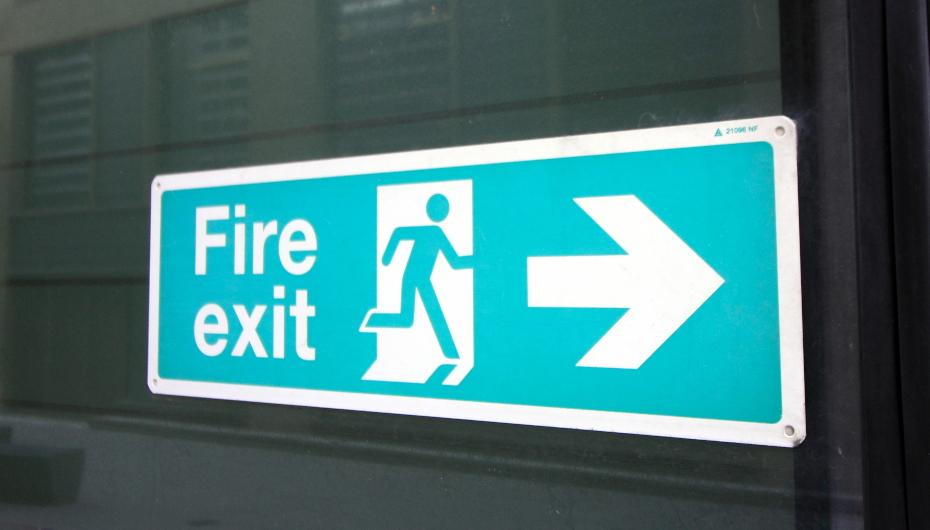
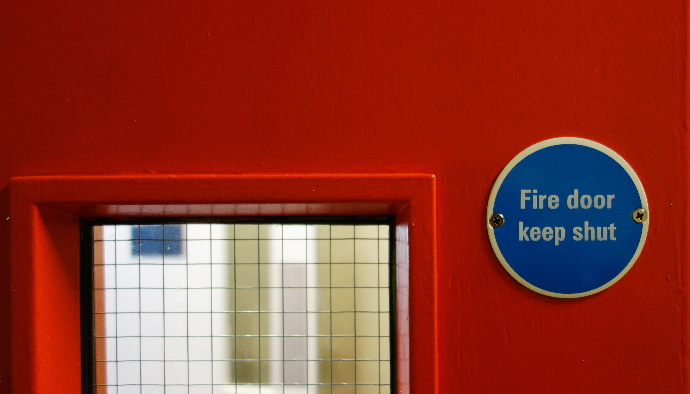
Inspectors will also check that signage around the door and markings on the door are clearly visible and correct for the door type.
- Functional testing:
Inspectors will then conduct operational tests to ensure that fire doors open, close and latch correctly, verifying that door mechanisms are functioning as intended.
- Clearances:
Gaps around the door hinges and frames should be less than 4mm in diameter and between the floor and door edge should be less than 10mm when closed. An inspector will ensure that the clearances around the door meet these requirements. This is a crucial part of the fire door inspection as these measurements prevent the passage of smoke and flames in the event of a fire.
- Seal inspection:
As well as door clearances, intumescent seals within the door jamb are inspected to ensure they are still intact and functional. Intumescent seals expand when exposed to high temperatures, this ensures that any gaps around the door are filled which prevents the spread of fire.
- Documentation and reporting:
Once the inspection is complete, the assessor generates a report that will outline any issues found, recommended repairs or replacements, suggested fire safety training, and an overall assessment of the fire doors’ compliance with government regulations.
With The Fire Door Inspection Scheme (FDIS) stating that 75% of fire doors in the UK do not meet regulatory standards, it is important that property managers are aware of the importance of these routine checks, and that it is part of their fire safety plans.
How can Nortec Fire help?
At Nortec Fire, as part of our fire safety services, we can conduct regular fire door inspections on your premises.
Please do not hesitate to get in touch with Nortec Fire to discuss your fire safety needs. Our experienced team can conduct an on-site survey and recommend services to ensure the safety of your people and premises.
Related updates...

7th May 2026
A Joined-Up Approach To Security

3rd March 2026
How Nortec Fire Champions Workplace Safety

26th November 2025
Fire Safety In Industrial Environments
Our Partners & Accreditations


